
Online Weight Loss Coach for Women
Registered Dietitian-led coaching for women who are done starting over
Updated October 2026. Alana Kessler, MS, RDN, CDN, is a Registered Dietitian and online weight loss coach with more than 20 years of experience helping women lose weight without dieting, including over 15 years of clinical practice. Her work starts where most weight loss plans stop: with the nervous system patterns that walk a capable, high-performing woman to the fridge at 9 p.m. when she isn't hungry.
You already know what to eat. You could write the meal plan yourself. Knowing has never been enough on the nights the inbox won't close and food is the fastest way your body knows to settle down. If you are ready to stop starting over every Monday, you can see how the work is structured here.

AS SEEN IN




Meet Your Online Weight Loss Coach: Alana Kessler, MS, RDN
An online weight loss coach builds a personalized plan with you, holds you accountable to it, and adjusts it as your life changes, all without an office visit. Most online weight loss coaches come from personal training or health coaching certifications. Online weight loss coaching with a Registered Dietitian adds clinical training in nutrition science and metabolism, backed by a credential you can verify through the Commission on Dietetic Registration.
That training matters because your weight was never only a food problem. This isn't about finding a better plan. It's about building a body that stops fighting the plan you already have.
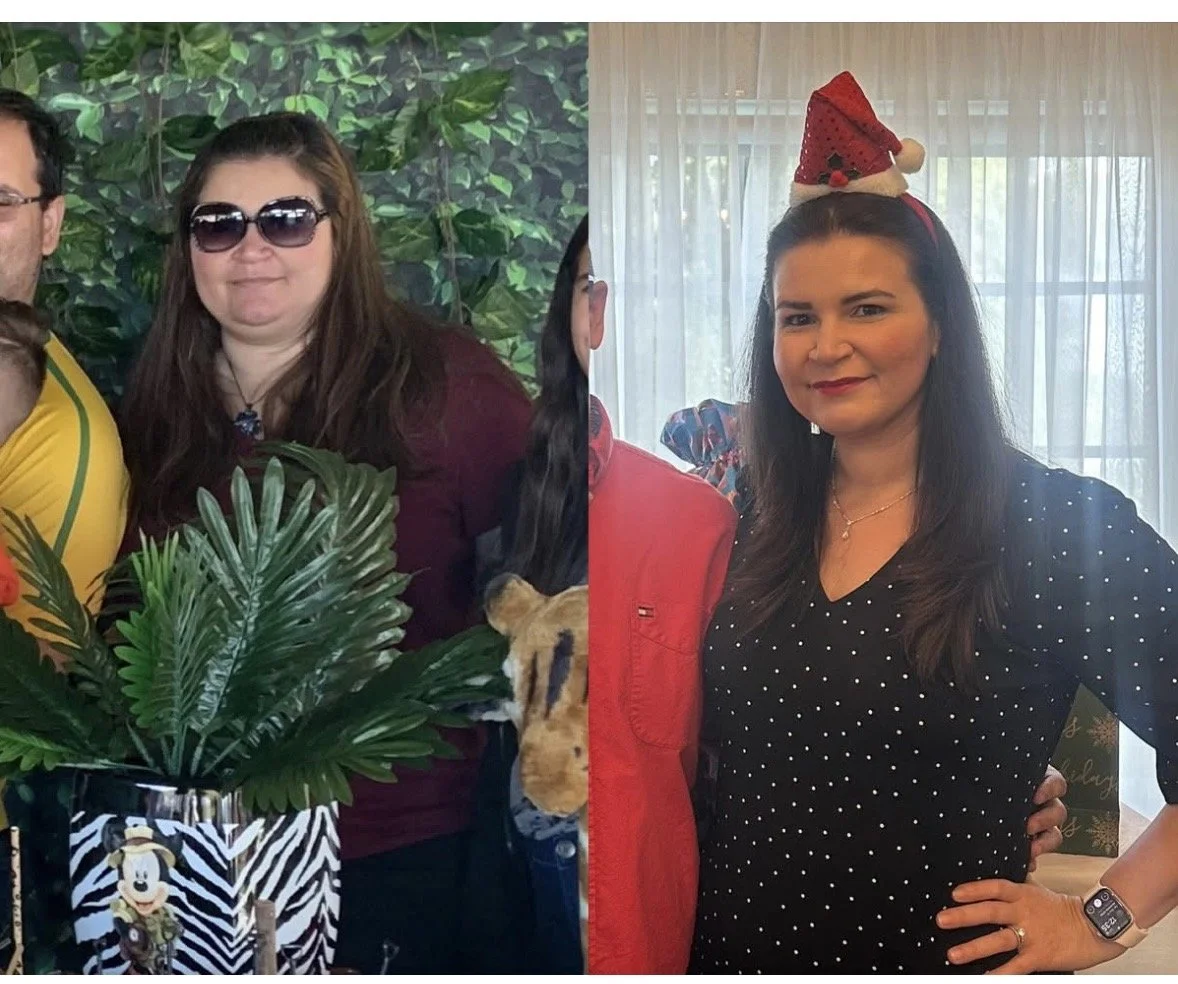
I know the difference from the inside. I lost 40 pounds, kept it off, and rebuilt a relationship with food and my body that still holds strong today. I hold a Master of Science in Clinical Nutrition and the RDN credential, and I pair that clinical base with nervous system regulation through The Sober Eating Sequence™. Most coaches bring one or the other. You get both.
Why You Keep Starting Over With Weight Loss
Weight loss stalls for high-achieving women because restriction raises stress, and stress drives eating. You run a team, a household and a calendar that never empties. Then you add a diet on top, and your body reads the cut as one more threat to manage.
You've tried restriction
Restriction creates the opposite of what you want. Each new rule tightens your nervous system a little further. By evening, when you're tired and depleted, the urge to eat is strongest, at exactly the hour your willpower is lowest.
The research backs this up. In a UCLA study published in Psychosomatic Medicine, women on a restricted 1,200-calorie diet produced more of the stress hormone cortisol, and tracking calories alone raised how stressed they felt.
That's when the cycle runs: restriction → tension → overwhelming urge → eating past full → shame → more restriction.
The food noise won't settle down
Real hunger builds slowly and comes with physical signals: low energy, a growling stomach, a clear want for a meal.
Stress eating arrives all at once. The day held together on coffee and discipline, and by 9 p.m. you're standing in the blue light of the open fridge, eating something you didn't want.
You can understand this distinction perfectly and still not use it. Why?
Because your nervous system responds faster than conscious thought. Your hand is in the fridge before your mind catches up. Emotional eating is often part of this picture, and you can go deeper on that side of it here.
You've never had support built for your life
Apps, meal plans and group programs hand you rules, then leave you alone at 9 p.m. Online weight loss coaching with a Registered Dietitian gives you private support and a way of eating built around your calendar, so one hard week doesn't send you back to Monday.
This isn't a character flaw. Your system is at capacity. Willpower can't override a nervous system that has learned food is the quickest way to calm down. Rewiring can.
The Sober Eating Sequence™ breaks this cycle by teaching your nervous system it can settle down without food. Weight loss follows from that, not from a stricter plan.
How Online Weight Loss Coaching Works (and What's Included)
Online weight loss coaching with me is private, structured, and built around your calendar. There are no group calls to attend and no public forums to post in.
You won't get a new meal plan or another habit tracker. You'll change how your body responds to stress, so food stops being your default way to calm down.
Private 1:1 support
In Sober Eating Elite VIP and Concierge Private Coaching, you work with me directly: private coaching meetings each month and daily 1:1 access through a private client app.
Nutrition built around your life
There's no meal plan to follow. You build a personalized way of eating from your own preferences, routine and schedule, with the Sober Eating Playbook and Meal Guide to work from.
Nervous system regulation
Each phase trains your body to settle down without food, so cravings ease instead of being white-knuckled.
GLP-1 support
On a GLP-1 or coming off one, the work targets the eating patterns the medication doesn't change.
Accountability without rules
No calorie counting and no macro tracking. In the private programs, accountability comes from daily contact with a dietitian who knows your week, not from a log.
The core is The Sober Eating Sequence™, a 3-phase process that unlocks over three months, so your body changes in an order it can hold on to.

Phase 1: release + reset the patterns behind the weight
Phase 1 interrupts the automatic pull toward food when stress hits. You'll notice the urge without acting on it, and you'll start feeling what stress, boredom and disappointment feel like in your body.
By the end of Phase 1 (Days 1 to 30): the impulses ease. You can sit with an uncomfortable feeling without reaching for food, and stress stops sending you straight to the kitchen.

Phase 2: reprogram a new way to eat, without giving up the foods you love
Once the urgent patterns settle, you rebuild. You make eating decisions without fear, and a slice of pizza or a scoop of ice cream stops requiring a calorie calculation or a guilt spiral. Your identity shifts from "someone who sorts food into good and bad" to "someone who eats like a normal person."
By the end of Phase 2 (Days 30 to 90): you have a personalized way of eating built from your own preferences, routine and schedule, and it leaves you feeling clear, steady and in charge of your choices.

Phase 3: integration + weight that stays stable
The final phase locks in the new baseline. Real life keeps happening: the deadline, the hard conversation, the holiday. Your nervous system handles it without food. Weight stability isn't fragile, and it doesn't run on sacrifice. It's durable, because it's built on a regulated nervous system, not willpower.
By the end of Phase 3 (Days 90+): you move through stressful weeks without eating your way through them. Your weight stops swinging with your stress level, and your relationship with food is calm, easy and normal.
Why this works when diets haven't
Your nervous system reaches for food because eating releases dopamine and brings fast, temporary relief. Most weight loss programs answer that with replacement behaviors: journal, take a walk, run a bath.
Those are band-aids, and they feel like barriers to relief while your system is still dysregulated. The Sober Eating Sequence™ changes the underlying response first, so the healthier options start to feel appealing on their own.
Online Weight Loss Coaching vs. Apps, GLP-1s, and Therapy
Why weight loss apps stop working when stress hits
Apps like Noom, WW and MyFitnessPal work while you're logging. Then a hard week arrives, the logging stops, and the old pattern is still sitting right where you left it. An app manages the behavior from the outside. It doesn't change the reflex that sends you to the fridge.
Why GLP-1s alone don't keep the weight off
GLP-1 medications like semaglutide reduce appetite while you take them. In the STEP 1 trial extension, people who stopped semaglutide regained about two-thirds of the weight they had lost within a year. The medication turns the volume down on hunger. It doesn't change why you eat at 9 p.m. Even if you choose GLP-1s or other medical interventions, this work is the non-negotiable complement. Coming off Ozempic or Wegovy? Here's how to keep the weight off after you stop.
Why therapy alone doesn't move the scale
Therapy has real value. It explains where a pattern came from. But understanding why you eat doesn't rewire the reflex that reaches for food before your mind catches up, and that reflex is what keeps the weight from moving.
What a Registered Dietitian adds
I'm a Registered Dietitian Nutritionist (MS, RDN) and a nervous system specialist. Most weight loss coaches are either fitness and health coaches (strong on habits, light on clinical nutrition) or therapists (strong on emotions, not trained in food and metabolism). This work addresses both at once, which is why the change holds.

Real Weight Loss Results From Online Coaching
Tina on working with Alana Kessler, MS, RDN, as her online weight loss coach
Kimberly on how The Sober Eating Sequence™ changed the way she eats
Real Client Transformations
*
Real Client Transformations *
Lead Your Weight Loss With a Dietitian, Not an App
You've done the diets.
You've tracked every bite. You've promised yourself, more than once, that this Monday would be the one.
Or you can stop. And lead your own system instead of following someone else's rules.
Not someday. Not when you have more willpower. Now.
The work is the same whether you start today or six months from now.
Except in six months, you'll have lived 180 more evenings at the fridge.
Every month you wait, your body memorizes the chaos a little deeper.
You might be wondering: "What if this doesn't work for me?"
Here's what I know from 20+ years of working with women and their weight:
This work succeeds when you're ready to work it.
It isn't willpower-based. It's nervous system rewiring.
The only requirement is that you're tired of the cycle and ready for something different.
You Deserve Weight That Stays Put
You deserve to pack for vacation and love how everything fits.
You deserve to enjoy brunch without doing math afterward.
You deserve to feel at home in your body.
This is possible. It becomes predictable once your nervous system is rewired.
The only question is: are you ready?
Your Next Step…
Frequently Asked Questions
-
Yes, when it changes what drives your eating and not just what's on your plate. Diets and apps manage behavior from the outside, so results last only as long as the effort does. The Sober Eating Sequence™ changes the nervous system response underneath, which is why weight released this way stays off.
-
Most clients feel the urges ease within the first 30 days, and weight follows as eating stabilizes. The Sober Eating Sequence™ is built as a 90-day transformation, with full integration by around week 12. The pacing is deliberate: your nervous system learns predictability one step at a time.
-
No. Restriction is part of what keeps the cycle running. By Phase 2, clients eat pizza, ice cream or a glass of wine at dinner without calculating calories or bargaining with themselves afterward.
-
Yes. I work with women who are taking GLP-1 medications and women who are coming off them. The medication manages appetite. This work addresses the patterns that come back when the medication stops.
-
It's private at every level. The Sober Eating Sequence™ is self-paced over three months, with an optional private peer group and an add-on of two private 1:1 calls. Sober Eating Elite VIP is three months of 1:1 mentorship with multiple private meetings a month and daily access to me. Concierge Private Coaching is a six-month, all-access partnership. There are no group calls or mandatory public forums.
-
A Registered Dietitian has completed an accredited degree, supervised clinical practice and a national credentialing exam, and keeps up continuing education. "Weight loss coach" is not a protected title, so training varies widely. I'm Alana Kessler, MS, RDN, CDN: a Master of Science in Clinical Nutrition, the RDN credential, and 20+ years of helping women lose weight without dieting.
