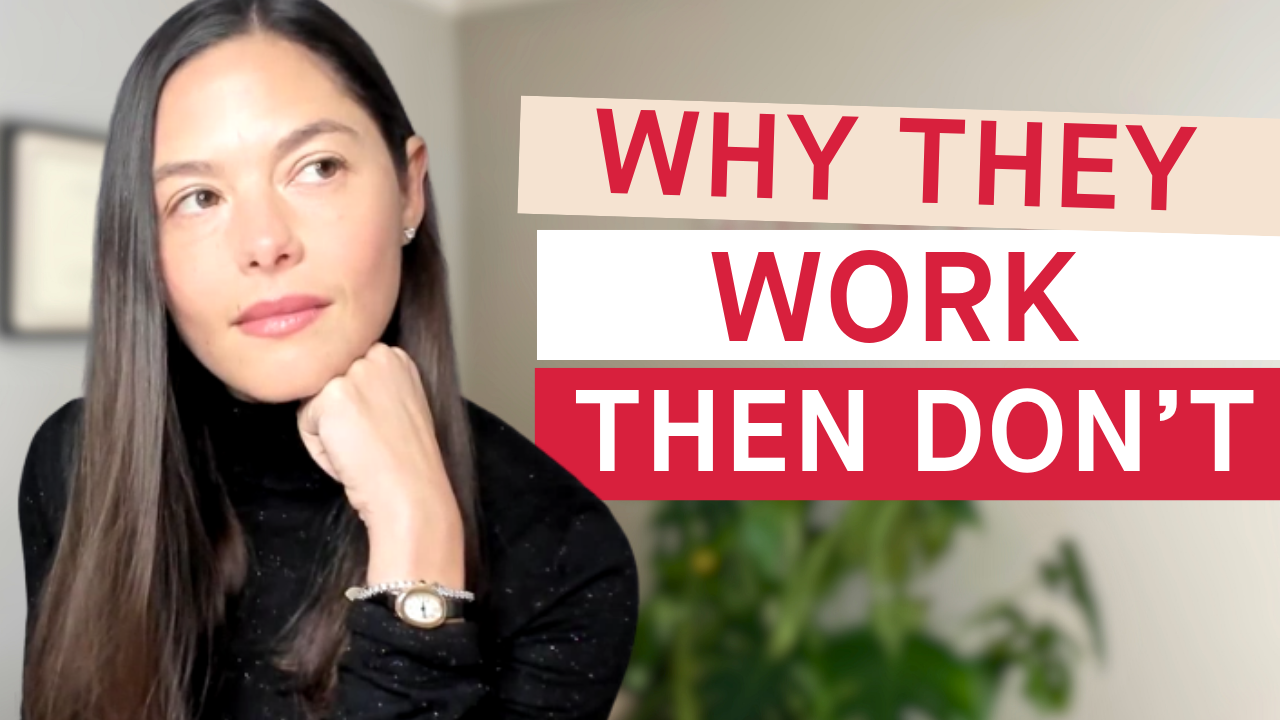
Emotional Eating Unwrapped (Sober Eating Podcast): EP 141
You start a new meal plan and, for a week or two, everything feels calm and decided. Then a dinner out or an off day breaks the streak, and you are back to searching for a better plan.
Alana Kessler, MS, RDN, CDN, a registered functional dietitian, walks through five reasons meal plans work until they don't, from decision fatigue to the comfort of having something to blame. Her view is that plans fail because they do the deciding for you, so what lasts is help learning to make food decisions yourself. As she puts it, meal plans "are designed to fail."
Takeaways
⦿ Meal plans often work in the short term because they reduce decision fatigue and create a sense of control.
⦿ The problem is not usually that you lack discipline; it is that external plans do not build internal trust.
⦿ Control is not the same thing as regulation, and rigid food rules can make eating feel more chaotic over time.
⦿ Falling “off plan” often triggers all-or-nothing eating because the system was built on perfection in the first place.
⦿ Healing begins when you stop searching for the perfect plan and start addressing what is underneath your struggle with food.
Why do meal plans feel so good at first?
A meal plan removes the constant back and forth about what to eat, and that relief is real. Alana explains that it also takes over the very skill you need: making food decisions in real time. Plans offer control and a sense of certainty, but control is not regulation. The moment life stops fitting the plan, through a social event, travel, or a day when you are simply less hungry, there is no internal skill to fall back on, so one slip can tip into all-or-nothing eating. Health sources list unhealthy dieting such as skipping meals or not eating enough as one possible contributor to binge eating.
"And again, it can work for a while, but it is completely unsustainable, because control requires constant vigilance." (Alana, 9:55)
What should you do instead of finding a new plan?
Alana's answer is to look at why you are eating rather than what. A new plan can quiet old patterns for a while because believing in it calms the nervous system, but the patterns underneath stay put. She also names the uncomfortable part: a plan gives you something to blame, which spares you from looking at the beliefs about your body and self-worth that drive the behavior. The work is learning to make decisions, tolerate uncertainty and listen to your body with curiosity instead of shame. If bingeing is part of the picture, read more on how to stop bingeing without another diet.
"The problem is your relationship with food, and your relationship with food is a reflection of your relationship with yourself, right?" (Alana, 22:30)
Key moments in this episode
Click a time to play the video from that moment.
0:15 Why meal plans work until they don't
3:25 Reason one: decision fatigue and agency
8:20 Reason two: control versus regulation
12:30 Reason three: the promise of certainty
16:45 Reason four: why meal plans feel like progress
20:25 Reason five: having something to blame
22:40 Food as a reflection of your self-relationship
24:05 Putting the five reasons together
Read the transcript
Full episode transcript
Clean verbatim transcript of this episode: filler words and false starts removed, nothing reworded. Click a time to play the video from that moment.
Introduction
0:00 I think this is the biggest appeal of meal plans, because if you're struggling with food, if you've been overthinking food or every meal all the time, if you're second guessing yourself constantly, the idea of somebody just telling you what to eat is incredibly relieving.
0:15 Hello and welcome back to another new episode of Emotional Eating Unwrapped. I'm your host, Alana Kessler, and today we are going to talk about meal plans. Yes, we are talking about meal plans and specifically why they work until they don't work. Because I think a lot of people have this experience with meal plans where they start one and it feels amazing. Finally someone is just telling you what to eat. It feels like you have the magic pill. You don't have to think about it. You don't have to make decisions. You just follow the plan.
0:45 For a while, it actually does work. You actually feel in control. You feel like you're doing it right, you feel like you might even have it completely figured out, and then it completely stops working. It stops working. Maybe you can't stick to it anymore. Maybe little things start happening, like you start quote unquote sneaking extra food on the weekends. Maybe it leads to a binge completely, and maybe you're just so tired of the plan altogether that you just stop following it completely.
1:15 And then you think to yourself, well, the plan didn't work, right? Instead of looking in other areas, you immediately blame the meal plan and you think to yourself, the meal plan was the problem. I need a different plan. So you find another one. Right after whatever self punishment that you do to yourself after the meal plan doesn't work, you hit another rock bottom, right? I have an episode where I talk about the rock bottom boomerang, where we get the most motivated when we hit our most rock bottom. And then usually what happens is we look for another plan, right?
1:55 And then the cycle starts again. And it works until it doesn't. And then you're wondering, what's wrong with me? Why can't I just stick to a plan? And the problem isn't that you can't stick to plans. The problem is that meal plans are designed to fail. Not intentionally, not maliciously, but they're actually built on a framework that doesn't account for how human beings actually work. We're gonna get into this today, and once you understand why meal plans work only in the short term and why they actually fail in the long term, I truly believe that by the end of the episode, you're gonna stop blaming yourself.
2:25 Okay, so today I'm gonna give you five reasons why meal plans work until they don't work. And you're gonna start seeing the whole system for what it actually is. All right, but before we dive in, if you are new to me, my name is Alana Kessler. I'm a registered functional dietitian. I've been in the health, the wellness, the mindfulness space for 20 plus years as an expert that has worked clinically. I also spent 10 years before that really struggling with my own issues with food and eating, and healing myself with a lot of the methodologies that I teach you in this podcast and in my programs.
3:05 And mainly what we do here is support people that are trying to overcome any kind of emotional or addictive behaviors with food, people that are looking to lose weight, reconnect with themselves, and really just live their best life. So if you're here and you're new, welcome. If you are a longer time listener, welcome back, and we are going to dive in.
Decision fatigue and control
3:25 All right, so the first reason why meal plans work is because they eliminate decision fatigue. They don't work because they eliminate your agency. They take away your skill of empowerment, of making your own decisions. Okay? So I think this is the biggest appeal of meal plans, because if you're struggling with food, if you've been overthinking food or every meal all the time, if you're second guessing yourself constantly, the idea of somebody just telling you what to eat is incredibly relieving.
4:00 You don't have to wonder if you're eating too much or not enough, or if it's the right things or if it's the wrong things. You just follow the plan and it feels good. It feels like relief, like you've been carrying this massive weight of having to figure it all out on your own, and now someone has taken that weight off your shoulders. And in the short term, it absolutely works, because decision fatigue is real. When you're making food decisions all day long, it can be tiring. And a meal plan removes that mental exhaustion.
4:30 And initially, when your brain has been in chaos, your brain loves this, one thing to focus on. It loves that. The problem is that eliminating decision fatigue also eliminates your skill of having agency. And agency is the thing that actually allows you to have the sustainable relationship with food. Because when you're following a meal plan, you're not learning how to make decisions, which is the core skill of agency. You're not learning how to listen to your body when you're following a meal plan, for the most part, especially if the meal plan tells you what time to eat. You're just kind of following instructions.
5:10 And that works as long as the instructions fit into your life, but the moment that your life doesn't fit the plan, the moment you have a social event or you're traveling or you're just not hungry for what the meal plan says you should eat, right, you don't know what to do. You don't know how to pivot, because you haven't been practicing making decisions. Okay? Notice how I'm saying practicing making decisions, 'cause it is a practice. Okay. And I think that's why people feel so out of control when they go off a meal plan, because you haven't developed the internal skills to navigate food and making food decisions without an external structure.
5:40 Okay? You've outsourced all of that to the meal plan, and when the meal plan's not there, you don't trust yourself. Okay? So you either pile on the willpower, or you try to force yourself back onto another plan, or you completely fall apart and eat everything in sight and have a binge, right? It's really very all or nothing. And then what's worse is that it becomes something that you take personally. You make it a part of your character. But here's the thing. The truth actually is that the plan was doing all the work for you and you never learned how to do it for yourself, okay? And that's the real issue, is that the plan was the one doing a lot of the heavy lifting and you never learned how to do it for yourself.
8:20 The second reason that meal plans work is because they give you a sense of control. They don't work because having control is not the same thing as being regulated, and being grounded, and feeling at ease. Control does not automatically lead to feeling calm and good. And I think for a lot of people, what they're actually looking for when they start a meal plan is control, right? It is control, because a lot of people, when they decide to go on a meal plan, have felt out of control around food, right? Whether you've been binge eating or overeating or eating in ways that just don't feel good, the meal plan feels like an amazing solution.
8:55 It feels like, okay, if I just follow this plan, I'll feel in control again. And like I said before, in the short term, that's true, right? You follow the plan, you feel like you're managing your eating. It feels like you are doing something from this out of control situation. Here's the thing: control, when you control food, is not the same thing as being regulated. Like I said, control is external. It's very rigid. It's about forcing yourself to do something, whether or not it feels right, whether or not it feels like it's what you wanna do in that moment. Regulation is internal. It's flexible. It's about responding to what your body actually needs in that moment.
9:35 And meal plans are all about control. They're about overriding your internal signals and following an external set of rules, an external structure, right? Eat this. Don't eat this. Eat at this time, not at this time. Have this amount of this, stop at this amount of that. And again, it can work for a while, but it is completely unsustainable, because control requires constant vigilance. You're actually thinking about food more. You're constantly monitoring yourself, trying to override what you're actually feeling to make the plan work into your life, and that's exhausting and tiring, and eventually you actually can't maintain it, right?
10:15 So you slip, you go off the plan, you eat something that you weren't supposed to eat, that wasn't on the plan, that wasn't in the time. And because the whole system is built on control, one slip can feel like a total failure. Because the whole system is built on following this plan, and this is how it works. It feels like you've lost control, and when it feels like you've lost control, you actually do lose control, because you think, well, I already messed up. I might as well just eat everything in sight. And then you're back to the behavior that you were trying to control in the first place.
10:45 This is the cycle that keeps getting people stuck. The truth of the matter is that what you want is to feel regulated. Regulation doesn't come from a meal plan. It comes from listening to your body and responding to what it's telling you. It comes from building trust with yourself. It comes from understanding that eating is not a moral issue that needs to be micromanaged, right? It's a biological process that needs to be supported. And it's also a fluid process, right? It's not the same every day, and we need to get comfortable with that. We need to get comfortable that eating isn't the same every day. Our quality of fullness isn't the same every day.
11:30 And we have to learn how to be comfortable with this type of fluctuation without feeling like it just devolves into complete chaos. And meal plans, they cannot teach you that. That is what meal plans are. They're like, you're gonna follow this plan because your inner compass can't be trusted. And as long as you're operating from that mindset, from that framework, from that belief system, you're never going to be able to develop the internal regulation that actually allows you to have a peaceful relationship with food.
12:00 All right, so before we move on to reason number three, I just wanna remind you that if you are loving this podcast, please follow us on YouTube, subscribe there. You can follow us on Spotify and Apple, please engage with us there too. We love reading your comments. We love getting your questions. If you feel so inclined, you can also leave us a rating and a review on Apple and Spotify. Five stars preferably, because it helps us too, get some juice in the algorithm when it sees that people are liking us. So thank you so much for listening, and we can move on to reason number three.
Certainty and progress
12:30 All right, reason number three: meal plans work because they promise certainty. This is why they work. They don't work because life is not certain. Okay? And I think this is a huge thing, because when you're struggling with food, everything feels uncertain, right? When you're struggling with food, when you're trying to lose weight, when you feel like food is taking over your brain, your thoughts, it can feel totally uncertain. You don't know if you're eating the right things. You don't know if you're eating too much or if you're eating too little. You don't know if what you're doing or what you're choosing to eat is going to lead to the results that you want, especially if weight loss is a goal for you.
13:10 And that uncertainty is very uncomfortable. Your brain doesn't like uncertainty, just naturally, the way that our brains are wired. They don't like uncertainty. And actually one of the biggest skills that I teach in my programs is how to learn how to embrace uncertainty. Because more than anything, that skill is gonna give you, even though it seems unrelated, all the results that you're looking for in your relationship to food and also in your relationship to your body and weight loss. Our brain naturally doesn't like uncertainty. So teaching it how to be rewired to like uncertainty is huge, because your brain wants to know, in logical terms, if I do this, I'll get y.
13:55 And meal plans provide that. They say, follow this plan and you'll lose weight. It feels like, okay, I know what to do now. It's twofold. It gives you that sense of accomplishment, like you know what to do. It also gives you that sense of resolution, where you're like, I just have to follow this plan and everything will be fine. And your brain can actually feel settled and clear, and your nervous system calms down because of this quote unquote promise. In the short term it works, mainly because of the downshift that's happening because you're believing in this meal plan. It's not because the meal plan itself works. It's because of your belief in the meal plan. Okay.
14:35 But life is messy, and meal plans, they don't account for that. Okay? They can't account for the fact that it's fluid, right? Some days you're gonna be more hungry than others, right? You're gonna have more cravings some days than other days. Maybe it's the time of the month. It can't account for this stuff. The meal plan that worked when you were home in your routine doesn't work when you're at a restaurant, when you're traveling with a group of friends and your meal times are so different, or the options are so different. And then what happens is you feel stuck, right? Because the plan doesn't have a setting for these situations.
15:05 The plan doesn't tell you what to do when life doesn't actually fit this plan. And so what happens is you either try to force the plan to fit into your life, which usually means you make your life smaller by skipping social events or by bringing your own food everywhere. Which, by the way, there are certain times that I talk about in my programs that I do recommend being prepared with certain things. But this isn't what I'm talking about. That's what happens. You either try to make your life small so that the plan fits into your life, or you abandon the plan completely because it doesn't work for your actual life.
15:35 And I think that's why so many people cycle through meal plans all the time, because they keep looking for the plan that's going to account for all the variables of living, right? They're trying to look for a plan that's gonna work no matter what, but that plan does not exist. It really doesn't. That plan doesn't exist. The only thing that can do that is you. It's you learning the skill of navigating food in real time. It's you developing the flexibility to adapt to changing situations, instead of rigidly following rules that don't fit, or just making your life really small and skipping things entirely.
16:15 This skill is something that a meal plan can't teach you, because meal plans are built on the premise of creating a false sense of certainty. The truth of the matter is that certainty is an illusion, and the only way that you can ever feel certain is to accept that truth and learn how to become comfortable with uncertainty, and let that skill be something that's certain because it's grown within you.
16:45 Reason number four: meal plans work because they feel like progress. They make us feel like we're progressing and moving forward. They don't work because they're not addressing the actual issue. They're not addressing the actual problem. When you start a meal plan, it feels like you're doing something, like you're taking action, and that feels good, especially if you have been stuck in a pattern of eating low quality food on a very regular basis and very large amounts, or you're just feeling a certain type of chaos around food.
17:15 The meal plan feels like, okay, I'm not just sitting here struggling anymore. I'm not just sitting here repeating the same toxic behaviors over and over again. I'm actively working on this. That gives you a dopamine hit. When we feel like we're moving forward, we get self-esteem, it's motivating. It gives you this hit of momentum. Even though a meal plan can feel like progress, it's not addressing the real problem, because the problem isn't that you don't know what to eat, okay? If you're being honest with yourself, it's not that you don't know what to eat. You're eating when maybe food is not the thing that you need to be consuming right now.
17:55 You're eating because you're using food to manage emotions. The issue at the bottom, at the root of all this, is that you don't trust yourself around food. It's not that you need somebody to show you what to eat and what portions and in what composition. That's not what you need. The problem is the underlying patterns, intangible, un-food related things that are driving the behavior, and a meal plan doesn't address any of that. A meal plan just gives you the what, right? The meal plan gives you what to eat, rules to follow, a timetable.
18:30 And following the rules, it can mask the true root causes for a while, because when you take your brain that's been chaotic and hyper-focus it on something new that makes you feel esteem and like you have momentum and protected, the patterns can quiet for a while. They can suppress for a while, just because we've now created a new nervous system state, but not because of the meal plan itself. The real patterns are still there underneath. So it's really just a bandaid, and it can make it seem like things are better, but eventually the chaotic behaviors with food are gonna come back, 'cause you haven't really changed anything. You just put a bandaid on it.
19:00 This is why you can just go from one meal plan to the next meal plan and never feel like they've resolved any of your real issues with food or with your eating behavior, with your bingeing or compulsive eating, or inability to stop eating when you're full. Because you're focusing on the substance. You're not focusing on the deeper issue underneath. You're trying to control the eating behavior by controlling the substance, which is the food, without understanding what's driving the behavior to begin with.
19:35 It doesn't matter, no matter how well designed, how perfectly it fits your macros for your body weight, and you have some crazy data that you got from whatever. It doesn't matter. You can't fix this internal behavioral problem with the most perfect plan or data, because this isn't a what thing. This is a why you're eating thing. And until you address that, until you address the why, and then you find a new skill to change that behavior. So even understanding the why isn't enough. You need to actually then go in and reprogram the eating impulses and teach yourself how to make decisions with food in the moment, flexibly.
20:15 That's what you need to learn how to do, and once you address that, it will get better. Otherwise, you just keep cycling through the same issues. And none of the meal plans will ever work, because none of them are actually designed to. Okay.
Something to blame
20:25 The last reason, you have to sort of be willing to be really honest with yourself for this one. But I'm all about that. We gotta look at our dark side. Sometimes meal plans work because they give you something to blame. They give you something to blame when things just go haywire. They don't work because they keep you from looking inward. If you're listening to this, I really feel like when we can start accepting where we are, absolving ourself of our personal responsibility and leadership, we start owning that. That's where real change happens. And this is one of the things that meal plans provide for a lot of people, is that it gives you something to blame.
21:05 And I'm not saying that we want meal plans to fail. It's not a conscious thing, but subconsciously, having something external to blame is so much easier than looking at what's actually going on on the inside. Because if the meal plan doesn't work, you could just say, well, that plan didn't work for me. That wasn't right for me. That plan was too this, or whatever it is, right? You can say the portions were too small. The food they chose was not satisfying. The timing didn't work with my schedule. And all that might be true, but it also means that you don't have to look at the deeper things.
21:35 You don't have to look at why you're using food to cope with stuff, why you feel like you can't control your impulses around food. You don't have to look at the belief systems that you have about your body or your self-worth, or your ability to trust yourself. You don't have to pull the hood up on that stuff. You can just blame the plan, right? And you can just find a new plan. And this is why I think meal plans are so seductive, because they keep you focused on the external. And it's very human to not want to go deeper, right?
22:10 Not everybody likes that stuff. I personally love that stuff, but not everybody likes that stuff. But I do recommend learning to like that stuff, right? Because it's hard at first and it's messy and it can be uncomfortable, and it requires you to sit with things that you might not wanna sit with. But it's also the thing that actually creates change. 100%. Because the problem isn't the substance of food. The problem is your relationship with food, and your relationship with food is a reflection of your relationship with yourself, right?
22:40 How well do you know yourself? How well do you trust yourself? How do you treat yourself? How do you respond to your own needs? And you can't optimize that. You can't make that relationship with yourself better by following someone else's meal plan, right? You can only change that by doing a different kind of self excavation work, of internal work, right? By understanding what's driving the behavior, by building new programming, new patterns, new belief systems, internal belief systems about yourself, your body, new ways of being with yourself. New ways to structure personal accountability and responsibility that doesn't feel like restriction.
23:15 And meal plans, they can't do that for you, right? They can't do that for you, and I want you to really hear this. What they can do is distract you from having to do it. I think really, once you see that, once you see that meal plans are keeping you on the surface, when the real work, the real change happens underneath, you stop looking for the perfect plan and you start looking at yourself. And when you do it from this angle, you're not looking at yourself with judgment. You are not looking at yourself with shame.
23:45 You're looking at yourself with a sense of curiosity, with the question, what's actually happening here? What am I trying to solve with this meal plan? What would it look like to address the actual problem instead of just putting a bandaid on it and just focusing on the symptom or the food, or the outcome?
Closing thoughts
24:05 Okay, so let's put this all together, because I think when you see the full picture, it becomes really clear why meal plans work until they don't work, right? So, they work because they eliminate decision fatigue. They give you a sense of control. They promise certainty. They feel like progress, and they give you something to blame when things go wrong. Okay? And all of those things, they feel real good in the short term. They feel grounding. They feel like ease, right? But they don't work. They don't work because they eliminate your sense of agency instead of building it up.
24:45 They promise a certainty in life, follow this, get that, but life is uncertain and unpredictable. And they create the illusion of progress without addressing the actual problem. And they keep you looking outward instead of inward. And so you get stuck in this cycle. The cycle repeats, and plan after plan, the same thing happens. There's nothing wrong with you here, right? It's not about you. It's not about your commitment. It's that meal plans were designed to fail. They're designed to not actually solve the actual problem. They're designed to manage symptoms and mask issues, make you not have to deal with some things that are underneath.
25:25 They're designed to get you potentially an outcome that ends up being totally unsustainable, because you can only live in this type of way for a little while. Eventually the underlying stuff's gonna surface, and you end up being right where you started. So you need to stop actually looking for the perfect meal plan, right? You start looking at what's underneath your struggle with food, right? Why are you eating in this moment? What's the energy that you're eating this food with, and what's happening? You need to learn how to make decisions, right? You need to learn how to regulate your nervous system without using food, right? Let's navigate uncertainty.
26:05 Let's address the beliefs that are keeping you stuck, right? Listen to your body and be able to trust and hear what it's telling you. And we need to stop thinking that anything external is more important and can give you the results and the outcome and the healing that you're looking for over your own intuitive self. All right. Well, that is all I have for you today. Thank you so much for listening to today's episode on meal plans. I hope that you enjoyed it. And until next time, I'm Alana and thank you for listening to Emotional Eating Unwrapped.
Related episodes
Creating freedom with structure - a flexible alternative to rigid plans
Trusting yourself with food - builds the self-trust plans skip
The dieting and emotional eating cycle - why restriction feeds the swing
Work with Alana
Start here: Invisible Weight Detox
An introduction to the Sober Eating Movement that finally gets your body and mind working together in under 30 days, so you can reclaim your personal power, lose weight and keep it off. No tracking, no shakes, no endless rules. It's a clear step by step process that helps you reclaim your self worth, eat like a normal person again, and watch the number on the scale move in the right direction. Enroll here
The full method: The Sober Eating Sequence™
The proven 3-phase method to stop food and dieting chaos, and release weight naturally through a new proven way of eating for weight loss and enjoyment - without dieting, restriction, or counting macros in as little as 90 days. This is where you finally trust your body and food choices, feel at ease in your skin, and stop circling back to food as the problem. Enroll here
1-1 support: Elite VIP
A 3-month private mentorship where years of struggle collapse into months of precision change. With custom meal development refined daily, private coaching intensives, and direct access to Alana, you’ll stop negotiating with food and step into the woman whose body, confidence, and choices reflect her true power. Apply here
1-1 support: Concierge
For the woman who refuses to settle, Concierge is the highest level of private mentorship. With unlimited access to Alana for coaching, every detail and nuance is addressed with luxury-level concierge private support tailored to your real day to day life, so you experience the deepest transformation possible and embody full freedom. A luxury 3-day 1-1 weekend retreat with Alana is included. Apply here
Coming Home to Your Body
A program designed to support your Sober Eating Method journey. A self-paced course to help you feel safe, grounded, and at peace in a body that's still changing. Learn to build trust with your body now, not just after weight loss. Enroll here
Free quiz
What’s your hidden food and self belief pattern keeping you from lasting weight loss? Take the free quiz
Ask a question for a future Q&A
Leave a voice message for our next Q&A episode.
Listen and subscribe
Follow Be Well by AK
Disclaimer: The information shared in this episode and on this website is for educational and informational purposes only. It is not a substitute for professional medical advice, diagnosis, or treatment.